
Body Composition at CH Medical
At CH Medical, we consider body composition an essential part of how we diagnose and treat our patients. We regard it as important as any vital sign, such as blood pressure or pulse. Our goal is to help you optimize your body composition, and the tools we use are tailored to your general health, age, and fitness level. Our approach is highly individualized. Different patients require different treatment. We believe that body composition management is as much an art as it is a science and we closely monitor the response of your body to the treatments we use.
What is body composition?
Body composition describes what your body is made of, not simply how much you weigh.
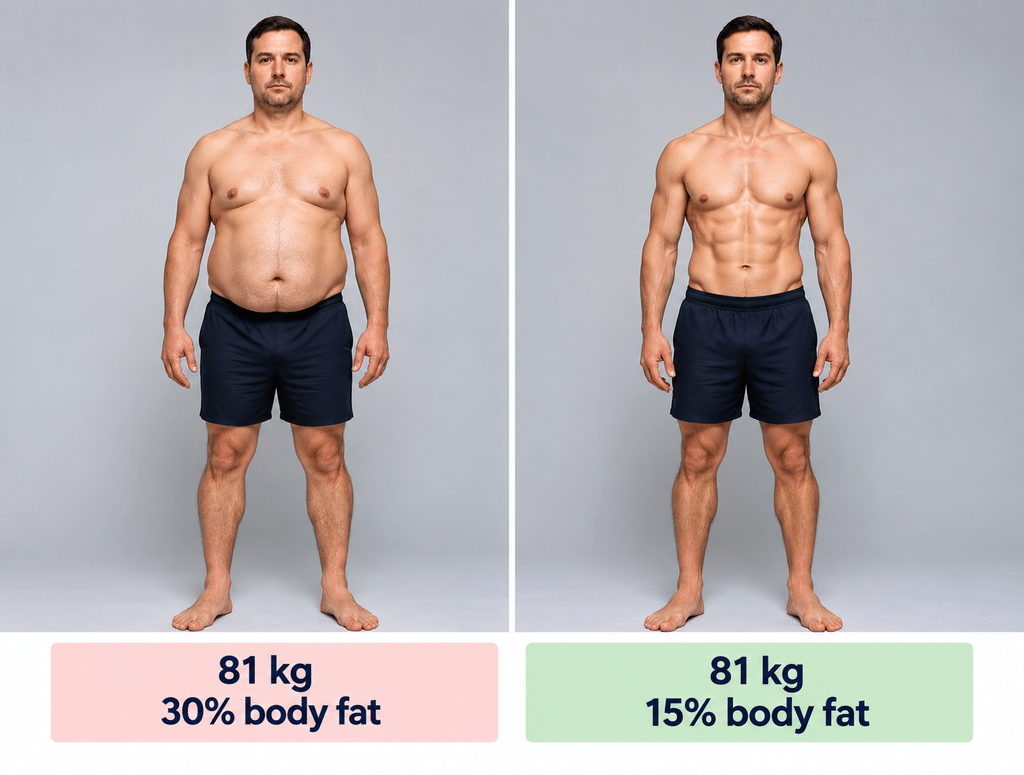
Two people can each weigh 180 lb (82 kg) and have very different health profiles. One may carry substantial muscle and relatively little visceral fat; the other may have less muscle and considerably more abdominal fat. Their BMI could be identical, yet their metabolic health may differ significantly.
What does it measure?
A thorough assessment looks at body fat percentage, fat mass, lean body mass, skeletal muscle mass, visceral fat, and often body-water distribution. More advanced methods can also assess how muscle and fat are distributed across different regions of the body.
For example:
- Person A: 180 lb, 30% body fat → about 54 lb of fat and 126 lb of lean mass
- Person B: 180 lb, 15% body fat → about 27 lb of fat and 153 lb of lean mass
The scale says they are the same. Physiologically, they are quite different.
Why does it matter for your health?
Excess body fat, particularly visceral fat around the abdominal organs, is associated with insulin resistance, type 2 diabetes, fatty liver disease, high blood pressure, abnormal cholesterol, and cardiovascular disease.
Maintaining skeletal muscle is equally important, especially as we age. Muscle supports blood sugar control and insulin sensitivity, strength, mobility, and physical independence. Age-related muscle loss can progress to sarcopenia, which raises the risk of weakness, falls, and disability.
This is why weight loss alone is not necessarily the goal. Someone could lose 15 lb and lose a substantial amount of muscle along with the fat. Conversely, someone who exercises and builds muscle may see little change on the scale while becoming metabolically healthier.
A better way to think about it
Instead of asking, “How much do I weigh?” a more useful question is:
“How much muscle do I have, how much fat do I have, and where is that fat located?”
In preventive and longevity medicine, tracking body composition over time is far more informative than tracking weight or BMI alone.
Why the scale doesn’t tell the whole story
Your bathroom scale tells you how much you weigh, but not what that weight is made of.
Imagine two people who both weigh 180 pounds:
- Person A has about 54 pounds of fat and 126 pounds of muscle, bone, and other lean tissue.
- Person B has about 27 pounds of fat and 153 pounds of lean tissue.
On the scale, they look exactly the same. Inside, they’re very different, and so is their health.
What we measure
A body composition check gives us a clearer picture of your health. It shows us:
- How much of your body is fat
- How much is muscle
- How much fat is stored deep around your organs (called visceral fat)
- How water is balanced in your body
- In some cases, how muscle and fat are spread across your arms, legs, and torso.
Why it matters
Too much fat, especially around your belly, can affect your health. The deep fat around your organs is linked to diabetes, fatty liver, high blood pressure, high cholesterol, and heart disease.
Muscle is one of your best friends, especially as you get older. Muscle helps keep your blood sugar steady, keeps you strong and steady on your feet, and helps you stay active and independent. We naturally lose muscle as we age, and too much loss can lead to weakness and falls. The good news is that we can work together to protect it.
That’s why losing weight isn’t always the whole goal. Someone might lose 15 pounds but lose valuable muscle along with the fat. On the other hand, someone who starts exercising might barely see the scale move, yet become much healthier because they’re building muscle and losing fat.
How we measure it
There are several ways to measure body composition, including DEXA scans and bioelectrical impedance analysis (BIA). At CH Medical, we use advanced, high-end BIA technology to analyze body composition and monitor the results of treatments. BIA devices simply send a very gentle, harmless signal through your body that you won’t feel. Because it’s so easy, we can repeat it at your visits to track your progress.
NB : BIA body composition measurement :
For the most accurate results, please:
- Drink water normally the day before, so you’re well hydrated
- Avoid heavy exercise and alcohol for about 8 hours beforehand, ideally just try doing the measurement in AM at about the same time.
- Try to come at a similar time of day for each check. Same conditions every check up.
- BIA readings are sensitive to hydration, recent meals, exercise, and alcohol.
Pricing : This is a subscription program, you pay monthly fee to participate. People are very different and may require different treatments to achieve desired results. Because of these differences the price may vary. Please come see us for a complementary consultation – we will evaluate you, discuss treatment options and pricing.
A picture is worth a thousand words ….. :
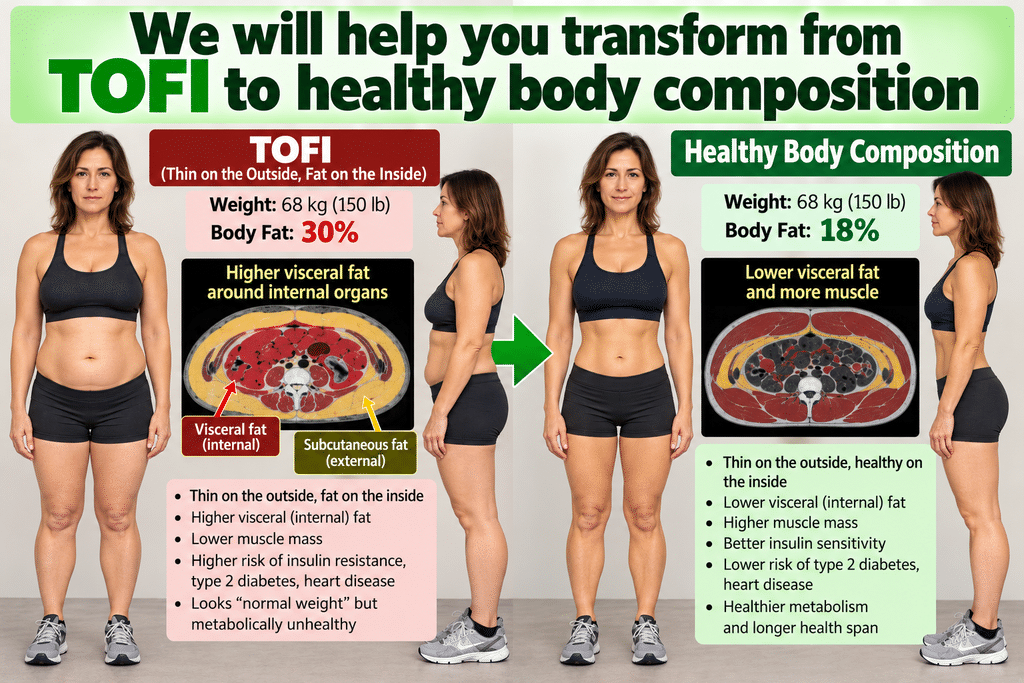
Same body weight, different health, different looks…..